
Against the Machine
Paul Kingsnorth | 2025 | Particular Books (Penguin Random Hous publishing group) | ISBN: 978-0-241-78840 -0
In September, a non-fiction book was published that has found a surprisingly large audience and has been highly praised by many reviewers: Against the Machine by Paul Kingsnorth. The book is currently only available in English. British author, historian, poet, environmental activist, ex-New Ager and newly converted Orthodox Christian Kingsnorth describes the work that sparked such enthusiasm as his ‘opus magnum’.
“Against the Machine” combines insights from thirty years of keen observation of the present with a comprehensive analysis of human history. Kingsnorth focuses on the history of ideas, philosophy, and spirituality of different eras, relating them to contemporary social, economic, political, and spiritual phenomena. He conveys this complex material in a wonderfully lively writing style and provides readers with a rich treasure of quotes from epoch-defining thinkers and authors – from Plato to Augustine, Marx, Simone Weil, and even the cult film The Matrix.
The work is a call for deep personal reflection and, ultimately, for deliberate resistance against “the machine.” At the same time, it describes the author’s persistent struggle to define what this machine actually is, why it should be opposed, and with which tools.
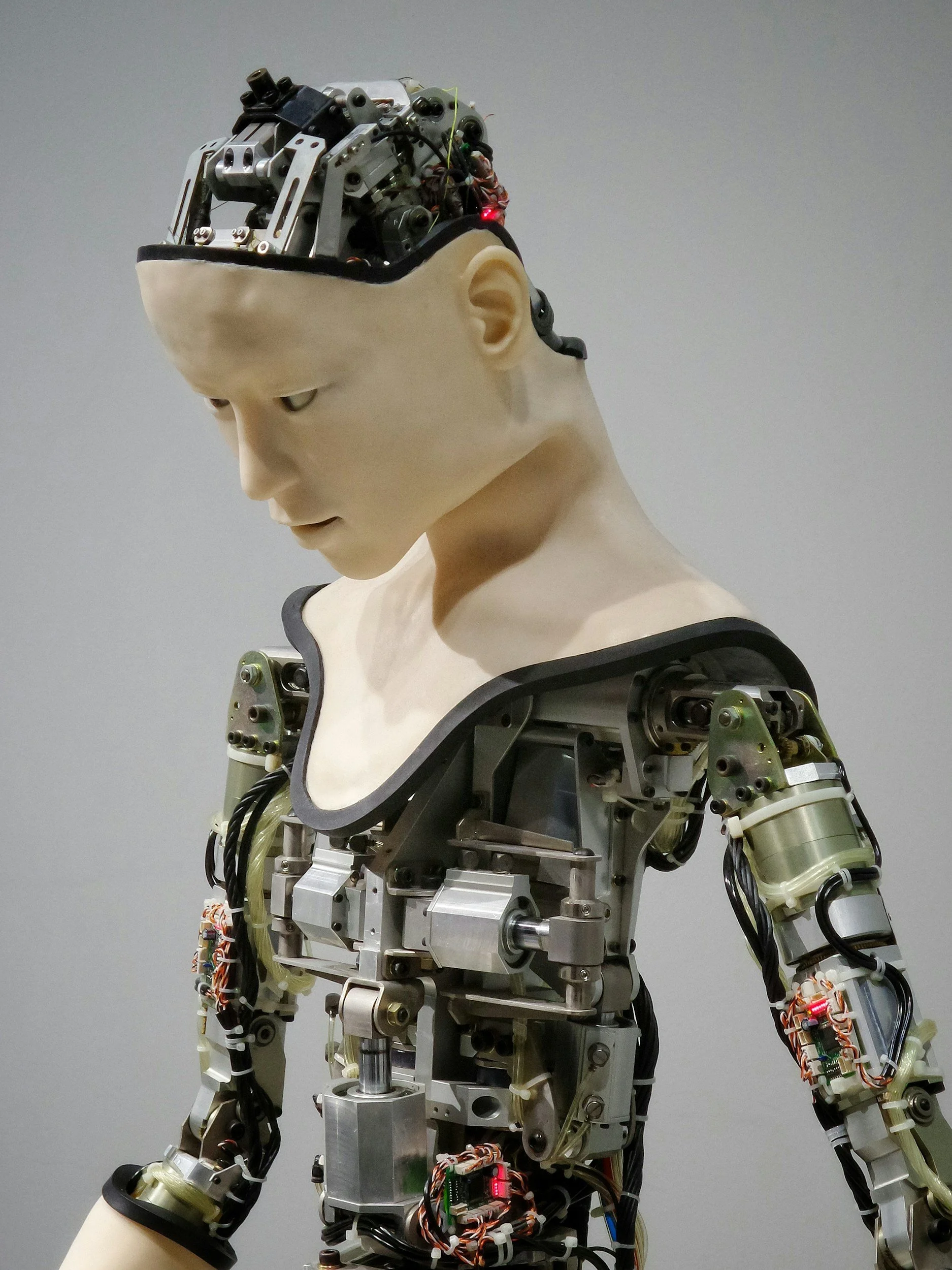
For Kingsnorth, the machine is a collective term for unrestrained faith in growth, uncontrolled technological booms, lawless artificial intelligence, a life-denying capitalism, and much more. It is a terrifying force that is difficult to describe, yet we all intuitively—or guided by the Holy Spirit—feel that it redefines our lives and our very understanding of what it means to be human. This power seeks to control the world while simultaneously alienating us from our roots, from nature, from community, and from God.
The “human” is used in opposition to the “technical.” The value associated with these terms has shifted dramatically in recent years. The human has increasingly been stripped of its holistic meaning and is now often judged negatively, as flawed and hollow, in dominant Western society. Meanwhile, the technical, under the influence of an uncritical faith in science, has acquired a historically unprecedented positive connotation. This is what is sometimes called “technological solutionism” – the belief that every concern (including our cultural, social, religious, and political concerns) can be framed as a “problem” with a technical solution, an app, or an algorithm to “solve” it.
Paul Kingsnorth provides a sharp and insightful perspective on these alarming developments. Yet he also inspires through his determination to encourage us to survive. For several years, the author has lived as simply and self-sufficiently as possible with his family in a small farmhouse somewhere in rural Ireland. At the same time, he has joined a small community of Orthodox Christians, whose liturgy, mysticism, and rituals provide him with a new access to the deep roots of humanity he longs for.
It is this grounding, essential for true humanity, that the great French philosopher Simone Weil speaks of – perhaps the most beautiful quote in Kingsnorth’s book for me:
“To be rooted is perhaps the most important and least recognized need of the human soul. It is also one of the most difficult needs to define. A person has roots because of their real, active, and natural participation in the life of a community that preserves certain special treasures of the past and certain special expectations for the future… Every person needs several roots. It is necessary for them to draw almost their entire moral, intellectual, and spiritual life from the environment to which they naturally belong.”
Alongside all this praise, a note of critique is perhaps warranted. Kingsnorth’s thesis can only truly serve as a starting point for constructive conversation if taken seriously. The “machine” he describes encompasses such a broad collection of phenomena (capitalism, bureaucracy, artificial intelligence, the pyramids, etc.) that it could just as well be described as “life-denying” or “evil.” Despite our sympathy for opposing “evil,” the concept is so broadly defined that careful analysis and differentiation of very different phenomena is made more difficult. The distinction between culturally positive developments and their opposite risks being overlooked by the “machine.” Sometimes his critique even amounts to a fundamental critique of culture itself. Yet the story of the Bible clearly moves from a garden to a city (even if that city may be a beautiful city-garden). Thus, it is important not to cultivate false romanticism but to embrace our cultural mandate boldly, creatively, and hopefully—without turning our projects into a new Tower of Babel.